Tanghulu Recipe- Easy Chinese Candied Fruit Dessert
Tanghulu Recipe (Chinese Candied Fruit) might just be the magical treat your sweet tooth has been dreaming of! Imagin extracte biting into a perfectly crisp, glassy shell that shatters with a delightful crackle, revealing the juicy, vibrant fruit hidden within. It’s this incredible textural contrast, combined with the pure, unadulterated sweetness, that has captured hearts and taste buds worldwide. This isn’t just any dessert; it’s a nostalgic childhood favorite for many, a beloved street food staple in China, and a visually stunning masterpiece that’s surprisingly accessible to make at home. We’ll guide you through crafting your very own Tanghulu Recipe (Chinese Candied Fruit), transforming simple fruits into dazzling edible jewels that are as fun to make as they are to devour.
What Makes This Treat So Irresistible?
The allure of Tanghulu lies in its deceptive simplicity. At its core, it’s just fruit coated in hardened sugar syrup. Yet, the magic happens in the perfect balance of the tartness of the fruit – often strawberries, grapes, or cherry tomatoes – and the intense sweetness of the caramelized sugar. The translucent, amber-colored shell is not only beautiful but provides a satisfying crunch that’s unlike any other dessert. It’s a sensory explosion that brings joy with every bite, making it the perfect centerpiece for gatherings or a delightful afternoon pick-me-up. This Tanghulu Recipe (Chinese Candied Fruit) is your ticket to recreating that street-food enchantment in your own kitchen.
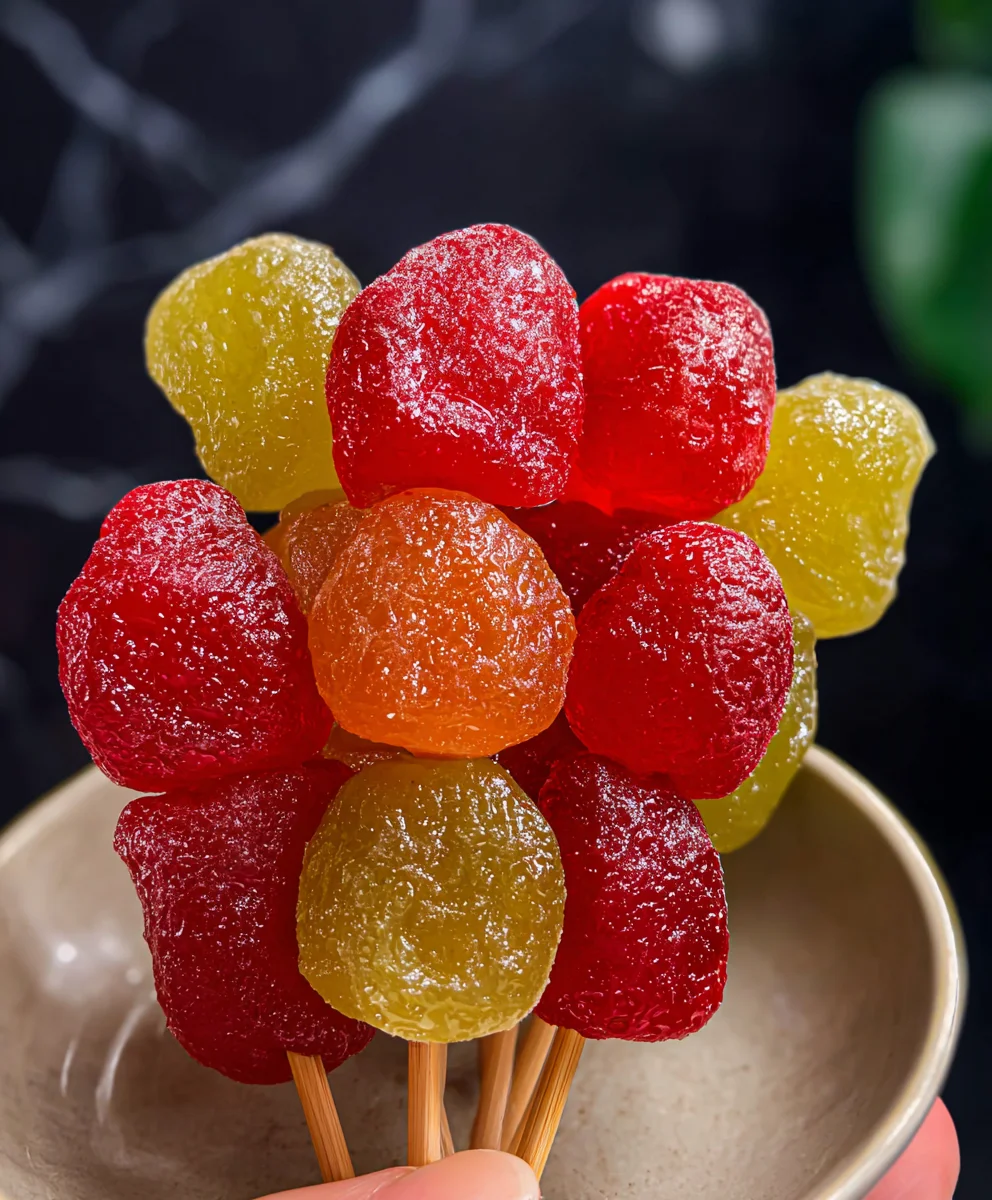
Ingredients:
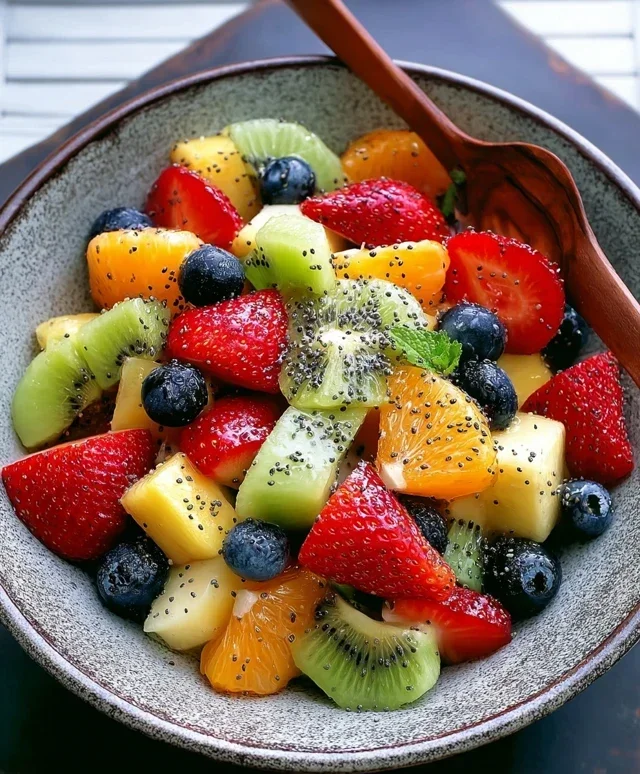
- 1 lb fresh strawberries, seedless green grapes, or a mix of your favorite fruits. Aim for about 30 pieces of fruit in total. I find strawberries and grapes to be classics for a reason – they hold their shape well and offer a delightful balance of sweet and tart. Feel free to experiment with cherry tomatoes (surprisingly good!), small chunks of pineapple, or even kumquats for a more adventurous twist. Ensure your fruit is dry before proceeding to prevent the sugar syrup from seizing.
- 2 cups granulated white sugar. This is the foundation of our crunchy, glassy coating. Standard granulated sugar works best for achieving that perfect brittle texture. Avoid using powdered sugar or brown sugar, as they contain different sugar crystals and moisture content that will not yield the desired result.
- 1 cup water. This is crucial for dissolving the sugar and creating the syrup base. Use regular tap water; no need for filtered or distilled unless your tap water is particularly hard or has a strong mineral taste that you want to avoid.
Preparing the Fruit and Workspace
Washing and Drying the Fruit
First things first, we need to prepare our stars: the fruit. Gently wash all your chosen fruits under cool running water. If you’re using strawberries, hull them (remove the green tops). If you’re using grapes, remove them from their stems. For larger fruits like pineapple, cut them into bite-sized cubes. The most critical step here is ensuring the fruit is completely dry. You can pat them dry with paper towels or a clean kitchen towel. Moisture is the enemy of hard candy; any water on the fruit will cause the sugar syrup to crystallize prematurely and make it difficult to achieve that smooth, shiny coating. If you’re using strawberries, you might want to give them an extra pat down.
Setting Up for Skewering
Once your fruit is dry, it’s time to get them ready for their sugary transformation. You’ll want to thread your fruit onto skewers. Wooden skewers are ideal for this. If you’re using wooden skewers, it’s a good idea to soak them in water for about 30 minutes beforehand. This prevents them from burning when you hold them over the heat later. Don’t over-crowd the skewers; leave a little space between each piece of fruit so that the sugar can coat each one evenly. A general guideline is to aim for 3-5 pieces of fruit per skewer, depending on their size.
Preparing the Cooling Station
While you prepare the sugar syrup, you’ll need a place for your finished candied fruits to cool down and harden. Line a baking sheet or a large plate with parchment paper or a silicone baking mat. This will prevent the tanghulu from sticking as they cool. Make sure this cooling station is close to your stovetop so you can quickly place the finished skewers down to set. Having everything ready beforehand is key to a smooth process, as the sugar syrup cools and hardens quite rapidly.
Making the Candied Coating
Boiling the Sugar Syrup
Now for the magic! In a medium-sized, heavy-bottomed saucepan, combine the 2 cups of white sugar and 1 cup of water. Place the saucepan over medium-high heat. Stir the mixture constantly with a wooden spoon or heat-resistant spatula until the sugar has completely dissolved. It’s important to stir until you no longer see any sugar crystals at the bottom of the pan. Once the sugar is dissolved, stop stirring. Allowing the sugar to boil undisturbed is crucial for achieving the correct consistency.
Reaching the Hard Crack Stage
Continue to cook the syrup without stirring. You’ll notice it will start to bubble and thicken. You can monitor the temperature with a candy thermometer if you have one. We are aiming for the “hard crack” stage, which is between 300°F and 310°F (149°C and 154°C). If you don’t have a thermometer, you can test the syrup by dropping a small amount into a glass of ice-cold water. It should form hard, brittle threads that snap. The syrup will turn a light amber color. Be patient during this stage; it can take about 10-15 minutes. Be extremely careful, as hot sugar syrup is very dangerous and can cause severe burns. Keep children and pets away from the stovetop.
Coating and Cooling the Tanghulu
Dipping the Fruit Skewers
Once your sugar syrup reaches the hard crack stage and has a beautiful amber hue, carefully remove the saucepan from the heat. Let it sit for about 30 seconds to stop the most vigorous bubbling. Now, working quickly but cautiously, dip each fruit-laden skewer into the hot syrup. Swirl the skewer gently to coat the fruit evenly. You want a thin, even layer of candy, not a thick, gloppy coating. A quick dip and lift is usually sufficient. If the syrup starts to thicken too much, you can briefly return the pan to very low heat to loosen it, but be careful not to overheat it, or it will turn too dark and taste burnt.
Allowing the Tanghulu to Harden
Immediately after coating each skewer, carefully place it onto your prepared parchment-lined baking sheet or plate. Try to place them so they don’t touch each other, allowing for easier handling once they’ve set. You’ll notice the candy coating will start to harden and turn opaque and shiny within minutes. It’s mesmerizing to watch the transformation. Allow the tanghulu to cool completely at room temperature for at least 30 minutes, or until the candy shell is completely hard and brittle. Resist the urge to touch them while they are still warm, as you’ll smudge the beautiful coating.
Final Touches and Storage
Once your tanghulu are fully cooled and the candy shell is perfectly hard, they are ready to be enjoyed! The contrast between the warm, soft fruit and the crisp, sweet candy shell is truly delightful. Tanghulu are best enjoyed fresh, as the candy coating can absorb moisture from the fruit over time, making it sticky. If you do have leftovers, you can store them in an airtight container at room temperature for a day or two, but they will lose some of their characteristic crunchiness. Avoid refrigerating them, as the humidity will make the candy soft and sticky.
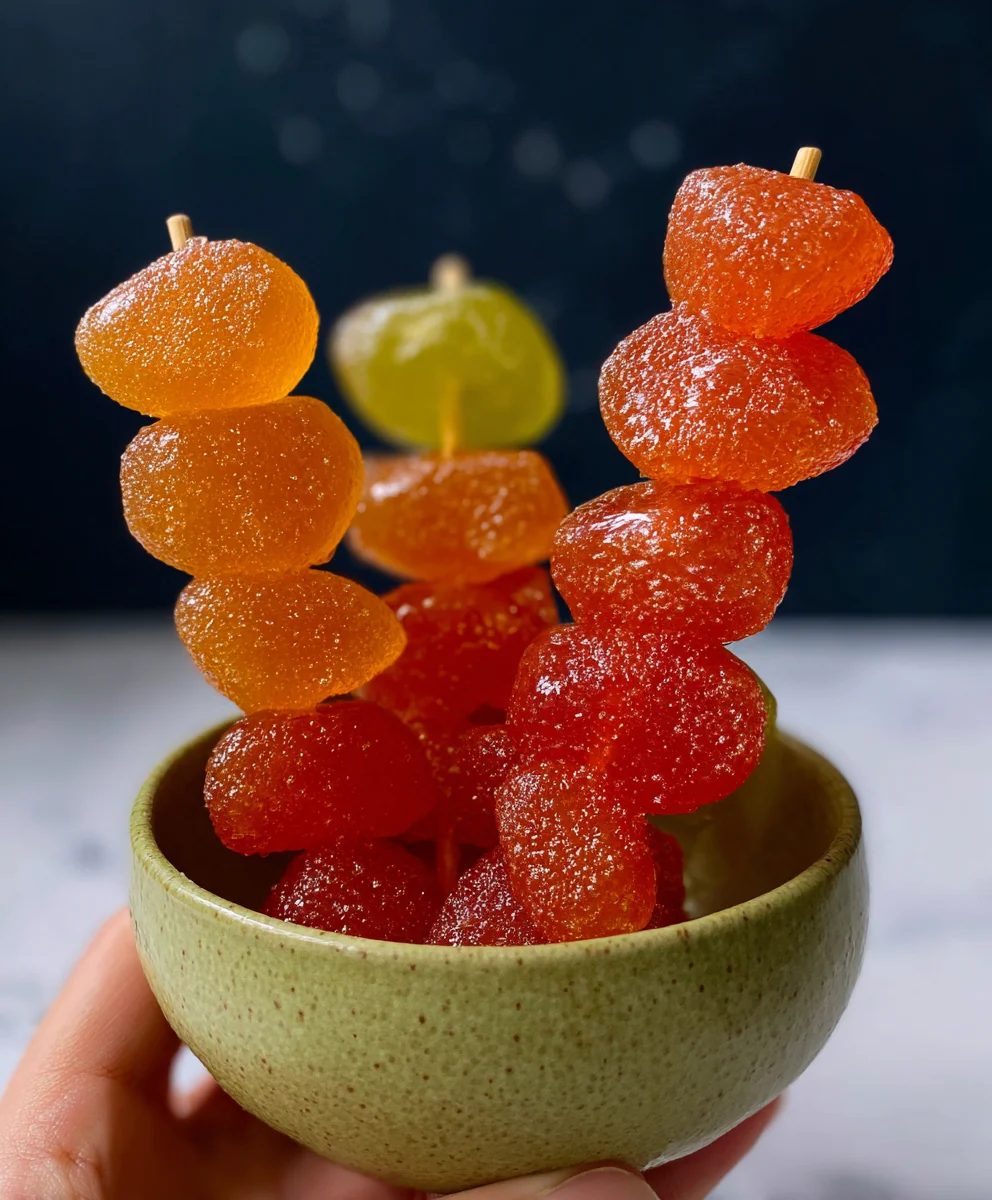
Conclusion:
We’ve journeyed through the delightful process of creating the perfect Tanghulu Recipe (Chinese Candied Fruit)! From selecting the freshest fruits to achieving that signature glassy sugar coating, this recipe offers a wonderfully sweet and satisfying treat. The magic of Tanghulu lies in its simplicity and the stunning visual appeal, making it a fantastic dessert for parties, holidays, or just a special homemade indulgence. I truly hope you enjoy making and sharing this classic Chinese confection. Don’t be afraid to experiment; the joy of Tanghulu is in its versatility!
When serving, remember that Tanghulu is best enjoyed fresh, while the sugar shell is crisp and the fruit still firm. They make a beautiful addition to a dessert platter or can be presented individually as charming edible gifts. For variations, consider using different fruits like grapes, kiwis, or even strawberries. You can also add a touch of food coloring to the sugar syrup for a more vibrant appearance, or sprinkle edible glitter onto the coating just before it sets for extra sparkle. Embrace the creativity and have fun with your Tanghulu creations!
Frequently Asked Questions about Tanghulu Recipe (Chinese Candied Fruit):
Q1: My sugar coating is cloudy or sticky instead of clear and crisp. What went wrong?
This usually happens if the sugar syrup wasn’t cooked to the correct temperature (hard crack stage, around 300-310°F or 150-155°C) or if you stirred the syrup too much after it started boiling. Also, humidity can affect the setting of the sugar. Try to make Tanghulu on a dry day. Ensure your fruit is completely dry before dipping, as water can cause the sugar to crystallize.
Q2: Can I use fruits other than the ones mentioned?
Absolutely! The Tanghulu Recipe (Chinese Candied Fruit) is incredibly adaptable. Firm fruits work best. Think about blueberries, melon chunks (like cantaloupe or honeydew), or even small apple slices. Avoid very soft fruits like bananas or raspberries, as they will get mushy and won’t hold their shape well.
Tanghulu Recipe- Easy Chinese Candied Fruit Dessert
A simple and delicious recipe for making traditional Chinese tanghulu, featuring a crispy, glassy candy shell coating fresh fruits.
Ingredients
-
1 lb fresh strawberries, seedless green grapes, or a mix of your favorite fruits (about 30 pieces)
-
2 cups granulated white sugar
-
1 cup water
-
Wooden skewers
-
Parchment paper or silicone baking mat
Instructions
-
Step 1
Wash and thoroughly dry your chosen fruits. For strawberries, hull them. For grapes, remove from stems. Ensure no moisture remains on the fruit to prevent sugar crystallization. -
Step 2
Thread the dried fruit onto wooden skewers, soaking the skewers in water for 30 minutes beforehand to prevent burning. Leave a small space between each fruit piece for even coating. Aim for 3-5 pieces per skewer. -
Step 3
Prepare a cooling station by lining a baking sheet or plate with parchment paper or a silicone mat. This will prevent the tanghulu from sticking as they harden. -
Step 4
In a medium, heavy-bottomed saucepan, combine sugar and water. Stir over medium-high heat until sugar is completely dissolved. Stop stirring once dissolved. -
Step 5
Cook the syrup without stirring until it reaches the hard crack stage (300-310°F or 149-154°C). This can be tested by dropping a small amount into ice water; it should form brittle threads. The syrup will turn a light amber color. Be extremely cautious of hot sugar. -
Step 6
Remove the saucepan from heat and let it sit for 30 seconds. Quickly and carefully dip each fruit skewer into the hot syrup, swirling to coat evenly with a thin layer. Return to low heat briefly if syrup thickens too much. -
Step 7
Immediately place the coated skewers onto the prepared cooling station, ensuring they don’t touch. Allow to cool completely at room temperature for at least 30 minutes, or until the candy shell is hard and brittle.
Important Information
Nutrition Facts (Per Serving)
It is important to consider this information as approximate and not to use it as definitive health advice.
Allergy Information
Please check ingredients for potential allergens and consult a health professional if in doubt.