French Macaron Recipe- Perfect Delicate French Macarons
French macarons are tiny, colorful, and utterly delightful meringue-based cookies that have captured hearts worldwide. Their delicate crisp exterior, yielding to a chewy, melt-in-your-mouth interior, is what makes a truly exceptional French macaron. It’s this magical textural contrast, combined with an explosion of flavor from the smooth ganache or buttercream filling, that makes them so irresistible. Many are intimidated by the thought of baking these elegant treats, picturing them as fussy and complicated. However, I’m here to tell you that with a little patience and the right guidance, you too can master the art of the French macaron. We’ll break down the process step-by-step, demystifying techniques and ensuring your first batch of French macarons is a triumph. Get ready to impress yourself and your loved ones with these sophisticated confections!
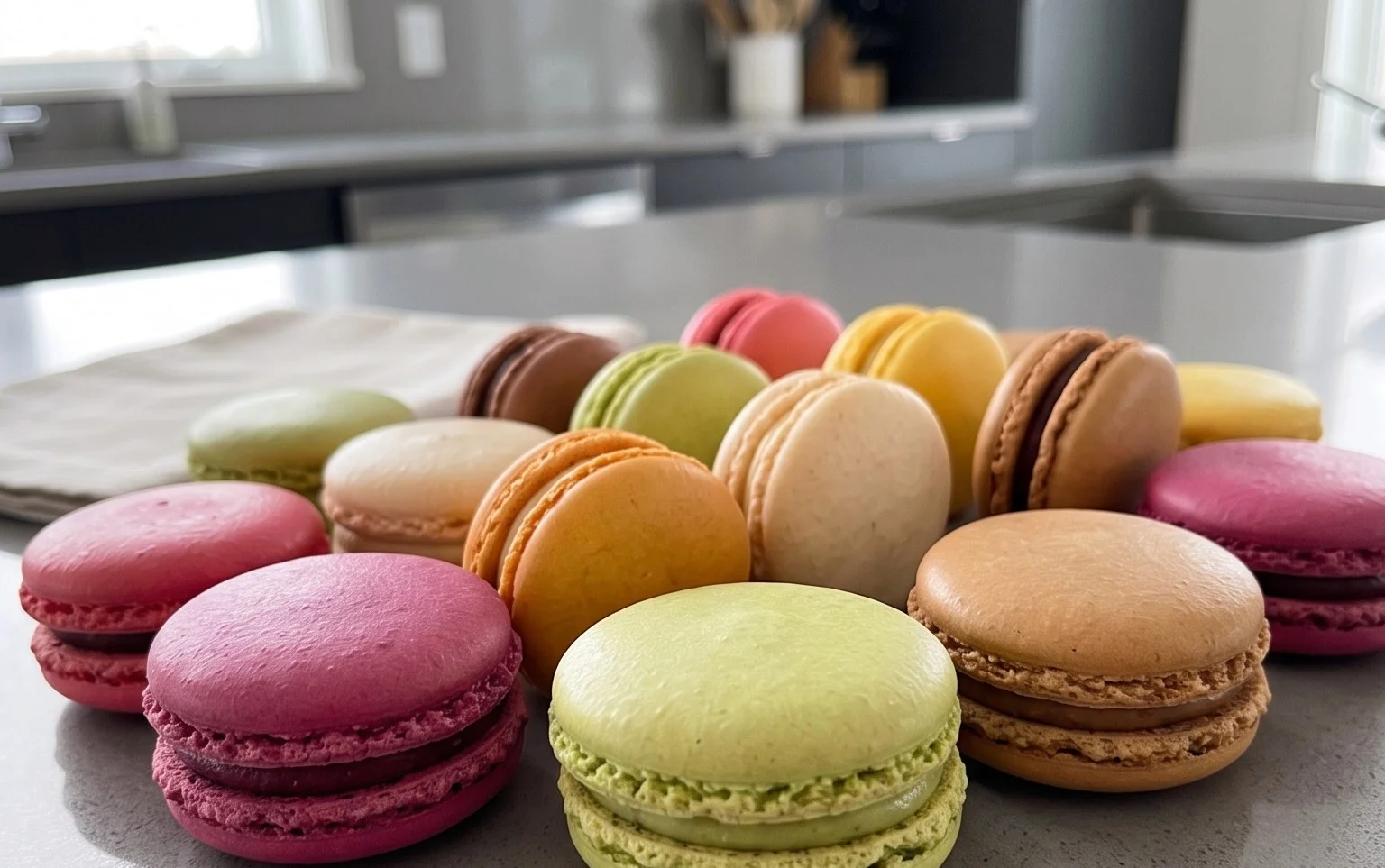
French Macaron Recipe
Welcome to the delicate and delightful world of French macarons! These elegant cookies, with their crisp shells and chewy interiors, are a true testament to patience and precision in the kitchen. While they may seem intimidating, with the right guidance and a bit of practice, you’ll be creating these beautiful confections in no time. This recipe is designed to be as clear and comprehensive as possible, so let’s gather our ingredients and embark on this sweet adventure!
Ingredients:
Preparing Your Ingredients
Before we begin extract the macaronage, it’s crucial to prepare your ingredients meticulously. This stage sets the foundation for successful macarons.
Almond Flour and Powdered Sugar Mixture
The first step is to create the dry ingredient base for your macaron shells. In a medium bowl, combine the sifted super-fine almond flour, powdered sugar, and salt. Whisk these ingredients together thoroughly. The goal here is to break up any remaining clumps and ensure an even distribution of all components. Using super-fine almond flour is key for a smooth shell; if yours isn’t finely ground, you can pulse it a few times in a food processor (being careful not to over-process and turn it into almond butter). Ensure you measure the almond flour after sifting it. Sifting removes larger particles and ensures a light texture. If your powdered sugar has lumps, it’s also a good idea to sift it with the almond flour.
Egg Whites and Sugar Syrup
Now, let’s address the egg whites. It is absolutely vital that your egg whites are at room temperature. Cold egg whites will not whip up to the same volume and stability as room-temperature ones. You can achieve this by separating your eggs several hours in advance and letting them sit out, or by gently warming them in a bowl set over a pot of simmering water (a double boiler) until they reach about 100-110°F (38-43°C), stirring constantly. This gentle warming also helps to stabilize the meringue.
Making the Meringue
This is where the magic happens! We’ll be creating a French meringue, which involves whipping egg whites with granulated sugar.
1. In a clean, dry bowl of a stand mixer fitted with the whisk attachment (or using a hand mixer), add the room-temperature egg whites. Begin extract whipping them on medium-low speed until they become foamy. Gradually increase the speed to medium-high and slowly add the granulated sugar, a tablespoon at a time, while the mixer is running. Continue to whip until the meringue is stiff and glossy. You should be able to turn the bowl upside down without the meringue sliding out. At this stage, add your liquid-gel food coloring and vanilla extract. Continue to whip for another 30 seconds to incorporate them evenly. The color should be vibrant.
The Macaronage: Folding with Precision
This is arguably the most critical step in macaron making, known as “macaronage.” It’s the process of folding the dry ingredients into the meringue. This step determines the texture and spread of your macarons.
2. Add about one-third of your almond flour and powdered sugar mixture to the meringue. Using a rubber spatula, gently fold the dry ingredients into the meringue. The technique here is crucial: scrape down the sides of the bowl, cut through the center, and then fold the batter back over itself. You want to break down the meringue just enough to create a smooth, lava-like consistency. Don’t overmix, as this will result in flat, spreading macarons.
3. Continue adding the remaining dry ingredients in two more additions, folding gently after each addition. The batter is ready when it flows off the spatula in a thick ribbon that slowly melts back into itself, resembling molten lava. You should be able to draw a “figure 8” with the batter as it falls from the spatula, and the lines should slowly disappear. This is where practice makes perfect, so don’t be discouraged if it takes a few tries to get it right. If the batter is too stiff, it will result in macarons with peaks; if it’s too runny, they will spread too much.
Piping and Drying
Once your batter has reached the perfect consistency, it’s time to pipe and prepare the shells for baking.
4. Transfer the macaron batter into a piping bag fitted with a round tip (about 1/2 inch). Line baking sheets with parchment paper or silicone baking mats. Pipe small, uniform rounds of batter onto the prepared baking sheets, holding the piping bag vertically and stopping when the circles are about 1 to 1.5 inches in diameter. Leave about 1 inch of space between each macaron. Once you’ve piped all the batter, firmly tap the baking sheets on your countertop several times. This helps to release any air bubbles trapped in the batter and encourages the macarons to spread into nice, flat discs. You can use a toothpick to pop any stubborn air bubbles.
5. Allow the piped macarons to rest at room temperature for at least 30-60 minutes, or until a skin forms on the surface. You should be able to gently touch a macaron without any batter sticking to your finger. This “skin” is essential for developing the characteristic “feet” of a macaron during baking. The drying time will vary depending on the humidity in your kitchen. In humid conditions, it might take longer.
Baking and Filling
The final steps involve baking your shells to perfection and then assembling your beautiful macarons.
6. Preheat your oven to 300°F (150°C). Bake the macarons for 12-15 minutes, or until the shells are firm and the feet are well-developed. The exact baking time will depend on your oven. You’ll know they’re done when they don’t wobble when you gently try to move one. Once baked, remove the baking sheets from the oven and let the macarons cool completely on the baking sheets before attempting to remove them. This is very important, as warm macarons will stick and break. Once cooled, gently peel the macaron shells off the parchment paper or silicone mat.
Assembling Your Macarons
Once your macaron shells are completely cool, it’s time to fill them!
Match up your macaron shells by size and pipe or spread your chosen filling (Vanilla Buttercream Frosting is a classic choice) onto the flat side of one shell. Gently press another shell on top to create a sandwich. For the best flavor and texture, it’s recommended to let the filled macarons mature in an airtight container in the refrigerator for at least 24 hours before serving. This allows the filling to soften the shells slightly, creating that signature chewy texture. Enjoy your homemade French macarons!
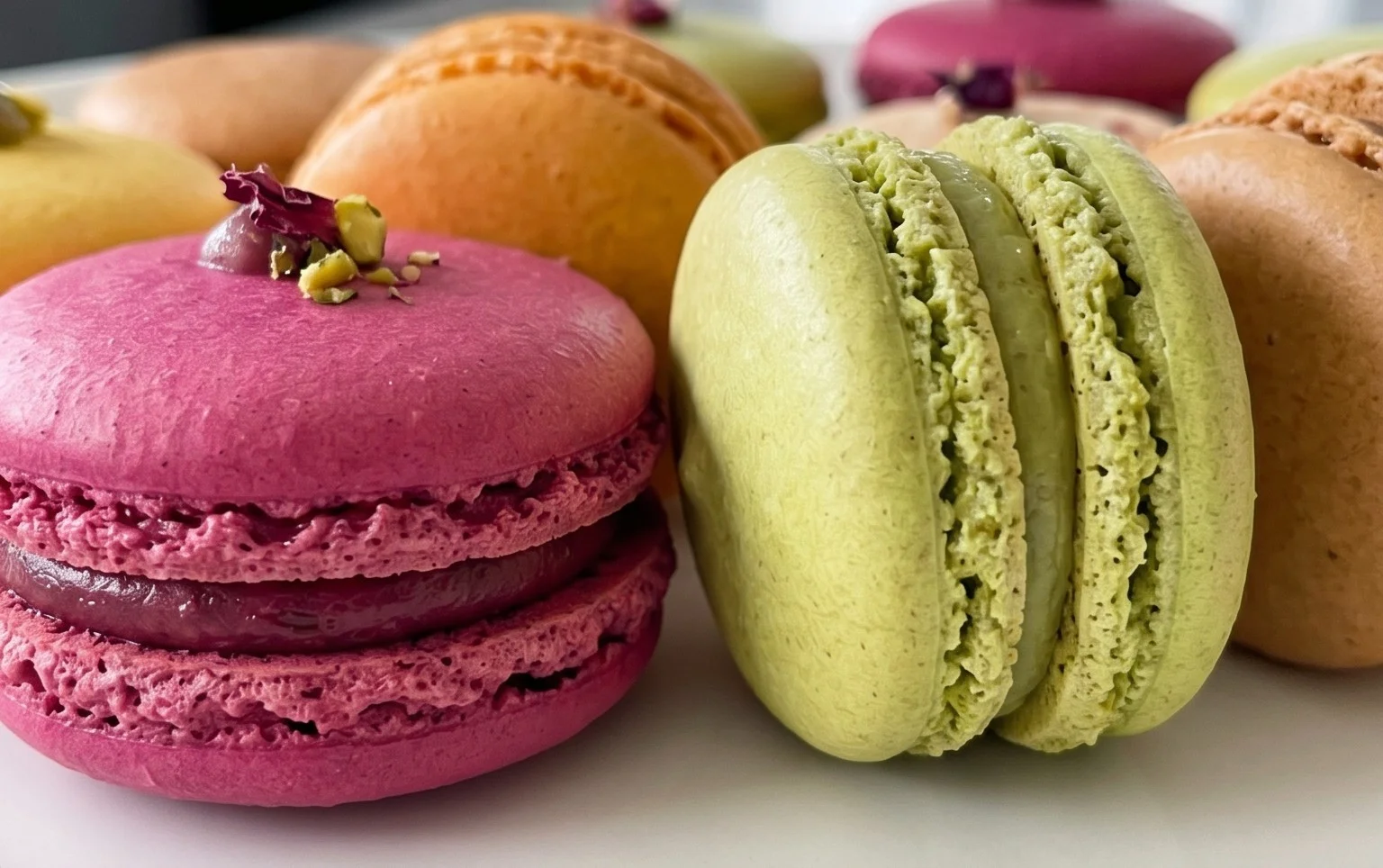
Conclusion:
And there you have it! Mastering the French macaron might seem daunting at first, but with this detailed guide, you’re well on your way to creating those delicate, airy, and delightfully chewy cookies that are simply irresistible. This French macaron recipe is designed to demystify the process, giving you the confidence to achieve those coveted smooth shells and perfectly filled delights. They are truly a showstopper, perfect for impressing guests at any occasion, from elegant dinner parties to casual afternoon tea.
Imagin extracte them filled with rich chocolate ganache, tangy raspberry buttercream, or even a subtle lavender-infused cream. The possibilities for flavor combinations are endless! Feel free to experiment with different food colorings to match your theme or mood. Don’t be discouraged if your first batch isn’t absolutely perfect; practice makes perfect with macarons, and each attempt will bring you closer to that flawless finish. I encourage you to dive in, embrace the process, and enjoy the incredibly rewarding experience of baking these iconic French treats yourself!
Frequently Asked Questions:
Why are my macaron shells cracking?
Cracking usually occurs due to overbeating the meringue, under-mixing the batter (not achieving the “lava” stage), or baking at too high a temperature. Ensure your meringue is stiff and glossy, your batter flows like molten lava, and your oven temperature is accurate.
My macarons have hollow shells. What went wrong?
Hollow shells are often a result of an unstable meringue, under-baking, or oven temperature issues. Make sure your meringue is fully developed and stable. Bake until the shells are set and don’t have a wobbly top. Also, ensure your oven is calibrated correctly.
Can I make macaron shells ahead of time?
Yes, absolutely! Once baked and completely cooled, you can store macaron shells in an airtight container at room temperature for a day or two, or in the refrigerator for up to a week. For longer storage, they can be frozen for several months.
French Macaron Recipe
A classic recipe for making delicate and delicious French macarons.
Ingredients
-
150 grams sifted super-fine almond flour
-
180 grams powdered sugar
-
1/4 teaspoon salt
-
120 grams large egg whites
-
60 grams granulated sugar
-
4 drops liquid-gel food coloring
-
1 teaspoon pure vanilla extract
Instructions
-
Step 1
Combine sifted almond flour, powdered sugar, and salt in a food processor. Pulse until finely ground. -
Step 2
In a clean bowl, whisk egg whites until foamy. Gradually add granulated sugar while whisking until stiff, glossy peaks form (meringue). -
Step 3
Gently fold the dry ingredients into the meringue in three additions, along with food coloring and vanilla extract, until a lava-like consistency is achieved (macaronage). -
Step 4
Transfer batter to a piping bag fitted with a round tip. Pipe small, uniform circles onto baking sheets lined with parchment paper or silicone mats. -
Step 5
Tap the baking sheets firmly on the counter to release air bubbles. Let macarons rest for 30-60 minutes until a skin forms. -
Step 6
Bake in a preheated oven at 300°F (150°C) for 15-18 minutes, or until the macarons have formed ‘feet’ and are firm to the touch. -
Step 7
Let macarons cool completely on the baking sheets before removing. Fill with Vanilla Buttercream Frosting or your choice of filling.
Important Information
Nutrition Facts (Per Serving)
It is important to consider this information as approximate and not to use it as definitive health advice.
Allergy Information
Please check ingredients for potential allergens and consult a health professional if in doubt.